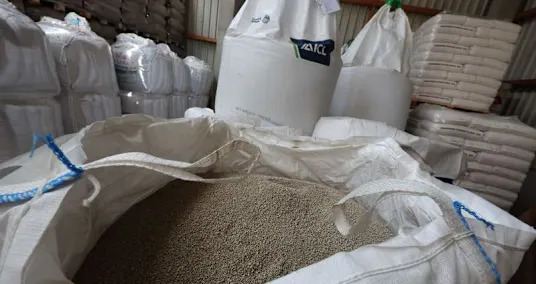

The war in Iran has resulted in a 30-40% spike in the cost of mineral fertilizer since the start of the year, threatening international food prices, according to German experts.
"World market prices for nitrogen fertilizer are increasingly approaching the peak levels we saw at the start of Russia's war against Ukraine [in February 2022]," said Philipp Spinne, managing director of the German Raiffeisen Association (DRV).
In Europe, however, consumers have not yet directly felt the effects because many farmers had already purchased their spring fertilizer before the Iran war began, the Bavarian Farmers' Association told dpa.
But should the war drag on, production costs in Germany and other countries are likely to rise, and with them, producer prices, it warned.
Four years ago, the threat to global food security feared by some experts did not materialize.
This was partly because Russia – a leading fertilizer producer – benefited from the invasion of its neighbour and actually increased its fertilizer exports.
The European Union has since gradually introduced tariff increases on Russian nitrogen fertilizers.
High energy prices are primarily driving the pricing spike, with gas prices accounting for up to 90% of the costs of ammonia and nitrogen production, said Germany's Agrar industry association.
Therefore, if gas becomes more expensive, fertilizer prices automatically rise. But if farmers use less fertilizer, crop yields suffer as a result.
LATEST POSTS
- 1
 Mom warns of Christmas gift hazard as daughter recovers in hospital
 - 2Find the Standards of Powerful Cooperation: Accomplishing Cooperative energy and Coordinated effort
- 3Savvy Tips for Seniors Hyundai IONIQ EV
- 4Inside Plan with Houseplants: An Aide
- 5Hezbollah uses ambulances, paramedic uniforms, as disguise for terrorist activity, IDF says



- Defense Minister Katz moves to extend IDF service to 36 months
- Burkina Faso must 'forget' about democracy, military leader says
- The Way to Monetary Health: Individual budget Change
- NASA is shooting for the moon. A guide to the Artemis II mission
- They died 'doing what they loved': The stories of workers in their 80s who died on the job
- Vote in favor of your Favored kind of craftsmanship
- Which Carrier Do You Suggest? Vote
- Favored Organic product for Seniors' Prosperity: Make Your Determination
- MacArthur Foundation awards $100M to outbreak surveillance network, a boost amid global health cuts