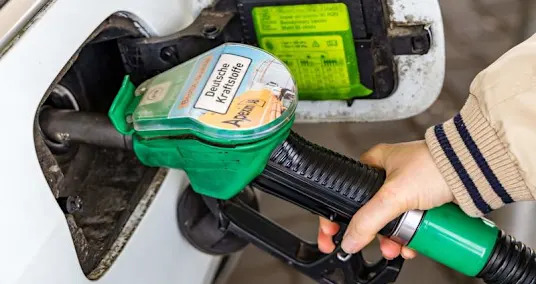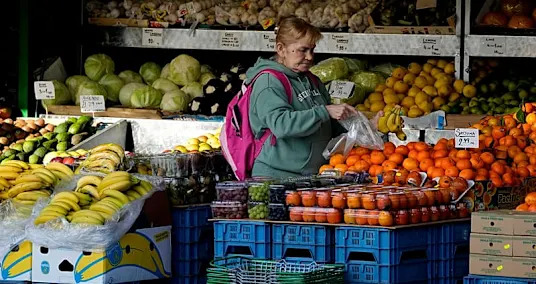
The joint US–Israeli strikes on Iran and Tehran’s response have pushed oil prices higher, with Brent crude frequently rising above $100. Experts say this will affect not only energy prices but also food prices.
The impact could be particularly strong in Europe, leading to higher food costs and a rising cost of living.
So, how will the crisis in the Middle East affect food prices across Europe? Which countries are more vulnerable and why?
Experts talking to Euronews Business point out that the crisis is expected to push global food prices higher through multiple channels.
"Global, as well as European, food prices are expected to rise because of the conflict due to the disruption of fertiliser and energy supply, as well as rising shipping costs,” Zsolt Darvas, senior fellow at Bruegel, told Euronews Business.
He emphasised that a large share of the world’s fertiliser and oil supply moves through the Strait of Hormuz, which has been effectively shut down due to the war.
Higher fertiliser costs translate directly into higher agricultural production costs.
Oil and LNG prices have already increased significantly, and higher fuel costs affect the entire food chain, raising production costs and shipment.
How will the situation evolve?
Significance of fertiliser
The United Nations Food and Agriculture Organization (FAO) reports that global fertilizer prices are projected to average 15–20 percent higher in the first half of 2026 if the crisis persists.
Maximo Torero, the FAO chief economist, noted that rising fertiliser and energy costs increase production expenses for farmers, and lower input application could result in reduced crop yields later in the year, tightening global grain supplies.
The FAO Food Price Index has already begun to rise again after a period of relative stability.
“While European natural gas prices surged 50–75 percent in the first weeks of the crisis, and higher energy costs increase costs across agricultural supply chains—including farm operations, irrigation, transport, storage, and food processing—these pressures will eventually transmit to consumer food prices,” Torero told Euronews Business.
The FAO cautions that if farmers cut fertiliser use due to high costs, future harvests may shrink, leading to tighter grain supplies and a surge in food prices later in 2026.
Three main channels driving food inflation across Europe
The FAO identifies three primary transmission channels through which the crisis could drive food inflation in Europe. Torero explained that energy costs are the first pressure point.
The Persian Gulf is a critical supplier of refined fuels, and disruption to those supplies has pushed diesel and jet fuel prices higher, increasing transportation and logistics costs throughout the food supply chain.
LATEST POSTS
- 1
 Spain breaks jobs record with 22 million Social Security contributors
- 2These 3 Nail-Free Finds Completely Transformed My Drab Bathroom
- 3China resumes flights to North Korea after a six-year pause
- 4Bayer reports positive results for blood thinner after 2023 setback
- 5She loves to give experiences. He goes for sentimental gifts. They ask an expert: What is the perfect holiday present?




- Step by step instructions to Advance the Eco-friendliness of Your Kona SUV
- 'Not the moon that I'm used to seeing': Artemis II astronauts describe seeing the far side
- Senegal president signs tough new anti-LGBT law doubling jail terms
- EU health regulator urges immediate vaccinations amid early surge in flu cases
- Find Wonderful Stream Voyage Objections On the planet
- Polish law aimed at lowering petrol prices takes effect on Tuesday
- Paul Feig loves a plot twist. Why not reboot 'Die Hard' starring a woman?
- Whale stranded off Germany for days found stuck again
- Minneapolis ICE shooting live updates: Protests continue over agent's killing of Renee Nicole Good; Walz puts National Guard on standby